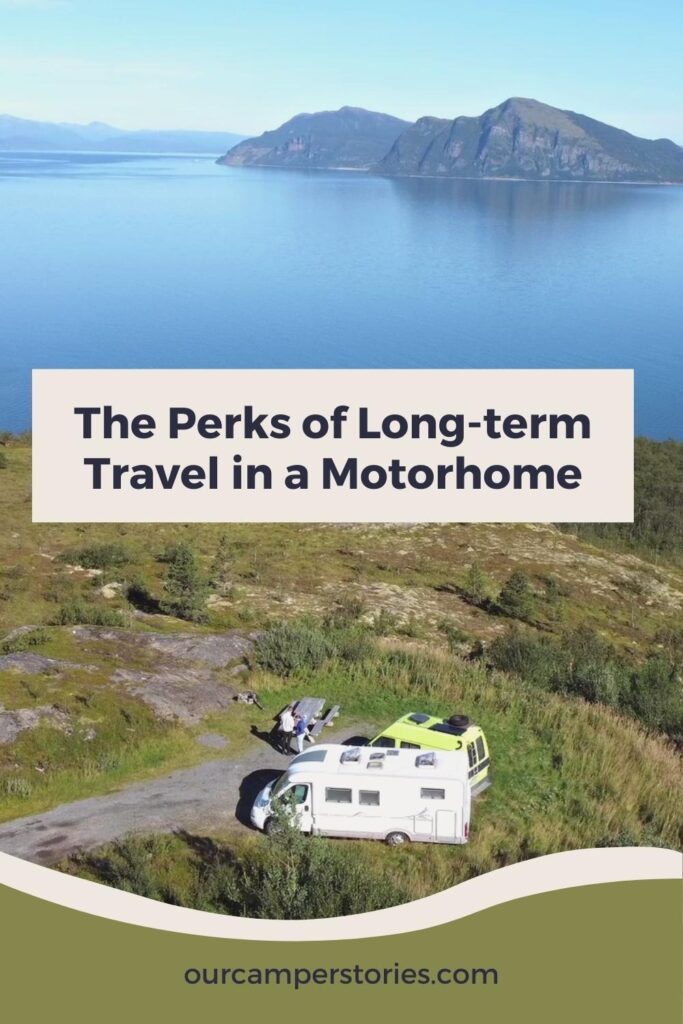
As life gets busier, more and more people desire a simpler lifestyle. And one of the options is living in your motorhome, a nomadic lifestyle that offers you more freedom and flexibility. There are many benefits to living on wheels, like the sense of self-sufficiency, being environmentally conscious and, of course, a sense of adventure.
We asked the VanLife – Europe community what they thought were the biggest benefits of long-term travel in their motorhome or campervan and combined that with our own experiences to create this blog post. Let’s explore these perks of living on wheels!
Adventure
One of the most obvious perks of living in a motorhome is the adventure! When you are travelling in your motorhome, you decide where you want to go and what you want to see.
- Do you want to go to the most southern point of Europe? You can!
- Want to escape the busy touristy beaches and find something secluded? You can
- Feel the need for warmer/colder weather? Just move.
Experiencing the continuous change of scenery, diverse cultures and meeting new people is a wonderful way to embrace the unknown and see more of Europe. You can wake up in a new location every day and decide where you want to go, what you want to see, and what you want to do. Whether it’s hiking through a national park, trying local cuisine, or simply enjoying the scenery from the comfort of your motorhome, there’s no shortage of adventure to be had. And because you’re not tied down to a specific location or itinerary, you can stay as long or as short as you like, immersing yourself in each new experience.
Flexibility
With all of these possibilities for adventure also comes a need for flexibility. Things might not go as expected, and you might need to adapt. Or you might come across something that you really do not want to miss and change your plans.
If you’re living in a motorhome, it’s best to avoid making long-term commitments because you never know how your day, week, or even month will go. Most long-term travellers have absolutely no idea what they’ll be doing or where they’ll be in 6 months.
In our case, Marten initially struggled with the flexibility aspect of long-term travel. He wanted to have a clear plan for the next few days, but we would often end up staying longer somewhere or never arriving at our intended destination. For example, we had to spend two days driving to a location to refill our LPG tank and move to a camping spot to work because our household battery was empty. However, he now recognizes that this nomadic lifestyle taught him to be more flexible and spontaneous, and he is happy to have learned those skills.
Self-discovery
It has been a journey of self-discovery for me. I am not as extroverted as I thought!
Jo, one of the people in the vanlife community
Long-term travel can be a powerful catalyst for self-discovery. When you’re constantly on the move, you’re forced to confront your own thoughts, feelings, and beliefs without the distractions of daily life. You’ll have the opportunity to reflect on your past experiences and future goals and to connect with your own inner voice. This process helps you better understand yourself and the world around you. Like Jo, you might learn that you are not exactly who you thought you were and that you are more outspoken or less than you originally thought.
In addition to learning more about yourself, living on wheels can also expose you to new cultures, ideas, and perspectives. You’ll have the opportunity to meet people from all walks of life and learn from different ways of living and thinking. This can challenge your own assumptions and beliefs and help you develop a broader understanding of the world. You may also discover new passions or interests that you never knew you had, whether it’s a love of hiking, a fascination with local history, or a talent for cooking on the go.
Self-sufficiency
One way you learn more about yourself is, you have to learn to rely on yourself more and become more resourceful. You’ll need to learn how to fix things yourself, whether it’s a mechanical issue with your vehicle or a leaky faucet in your mobile home.
In addition to these practical skills, long-term travel in a motorhome can foster independence and self-reliance. You’re free to choose your path and create routines rather than conform to societal norms and expectations. This can be especially empowering for those who feel trapped in their current situation or who are seeking a change from the traditional 9-to-5 lifestyle. At the same time, it makes you more aware of what you need to do to survive and thrive while travelling, and while you might not want a 9-to-5 job, you might need to find something that does work for you on the road.
Overall, the increased self-sufficiency that comes with long-term travel and living on wheels can be a transformative experience. It can help you develop new skills, gain confidence, and learn more about yourself and the world around you.
Minimalism
Several reactions mentioned that their awareness of space and minimalism were benefits of long-term travel, even after returning home. “Living in a camper van for six months has made me realise that I don’t even really need a flat, and I don’t need all the things in my flat as they have not been used for six months.”, one of them said.
And we too realised that we didn’t need as much space as we would have thought before we started travelling. Not too long before we started travelling, we had been looking into buying a bigger house, and when we came back after seven months of travel, it took us several weeks to get used to how big our house was.
Read more about this in ‘Does this feel like HOME’?
During extended rainy periods when we were stuck inside for days on end, we did notice that the motorhome sometimes felt too small. However, as soon as we had the opportunity to be outdoors, the motorhome was more than spacious enough for the two of us.
But it isn’t just about the space. It’s also about the stuff and even the experiences: “Van life kind of forces us to prioritize what’s important. We can’t take everything with us, obviously. And we can’t see and do everything. My husband also says that vanlife makes him think about what he’s capable of doing and “doing without”. Almost like an experiment in minimalism for the sake of trying it out“, someone send me as a private comment (shared with permission).
You learn to set priorities about what’s important to you. What are the things you need to take with you to feel comfortable and secure? What would you miss if you left it behind? What can you do to make your life simpler?
Also, think about the experiences you want to have. What do you really want to see or do? There is always more you can see, even if you have spent a lot of time in a particular place. For example, we have spent over two months in the North of Norway and still have things we want to see up there.
Environmentally conscious
I think with vanlife you get a better perception of things you take for granted at home, namely how much resources you take and how much waste you produce.
Claudio, one of the people in the vanlife community
Living on wheels often means having limited resources, such as water and electricity, which encourages you to be more mindful of your consumption. You’ll learn to conserve resources by taking shorter showers, using energy-efficient appliances, and reducing waste. It also exposes you to sustainable practices and eco-friendly initiatives. We began using biodegradable products such as dish soap and detergents to make our actions more environmentally friendly.
Of course, we took care to dispose of our waste responsibly. “At home, you’re used to not thinking of waste once it goes down the sink or down the toilet. In a van, that is just the first part of disposing of it.” Claudio says. Waste from tourists, whether it’s black water (toilet waste), grey water (used water), or garbage, is a major issue for sustainability. It’s a new phenomenon that areas have to consider. Finding suitable places to dispose of waste can be challenging, which may cause impatient individuals to dump their waste in inappropriate locations. We do not condone this behaviour, but we understand the frustration of being unable to find a spot to dispose of waste. In some areas, this waste problem is overshadowing the benefits of visitors in that area.
There is much more to discuss when it comes to sustainability in travel, and we can always learn more about it. Tarja Salmela is a tourism researcher who examines the vanlife phenomenon in relation to tourism mobilities and route tourism in Northern Norway and the Scottish Highlands. Her project “Vanlife landscapes” aims to work with the vanlife community, destination operators, and local resident communities to create more sustainable campervan/motorhome travel practices, especially in remote areas that have become popular self-drive tourism destinations. We have been working with her, sharing our fun experiences, opportunities, and struggles we have faced while travelling, especially as it relates to sustainability. Our goal is to find better practices together.
Check out Tarja’s blog if you want to learn more: https://vanlifelandscapes.weebly.com/ and follow her on Instagram: @vanlife_landscapes.
Community
One of the great things about long-term travel is the community it fosters. It takes a certain type of person to travel long-term in a campervan or motorhome, yet we are all very different. The community is diverse, with different points of view and ideologies. While this community is not always as open and as accepting as we would like (as we’ve seen by comments in the Facebook group, as well as on the road by how some people act and react), we feel that travelling provides more opportunities to experience different cultures and interact with new people, which can help foster a more open-minded, live-and-let-live attitude.
Our travels have led us to create some wonderful new friendships that have shown us new experiences and perspectives on the world. These range from small things like learning to eat hummus and halloumi (thank you, Jan) to deeper topics like sustainability (thank you, Tarja) and even insights into our own relationships (thank you, Maaike).
READ MORE: Want to travel for a long time? Start here with planning your road trip!
Final thoughts
Thank everyone who reacted on the Facebook post or privately to our question about what you’ve learned from living on wheels. It can be a transformative experience with many benefits.
We learned a lot about ourselves, flexibility and most of all, how little we actually need. We loved learning about the world, different views and connecting with people all around Europe.
If you are seeking a simpler lifestyle, then look into travelling long-term through Europe too. And if you want to know more about this experience, you are more than welcome to message us!
Pin this: