

Are you planning a motorhome adventure in Europe? Before you hit the road, it’s important to understand the weight restrictions that apply to your vehicle. European motorhome weight limits can be strict, and exceeding them can lead to fines and penalties.
In this comprehensive guide, we’ll walk you through everything you need to know about motorhome weight in Europe, including key regulations and tips to make your trip hassle-free.
The Legalities of the Weight of Your RV
When packing for a camping trip in your motorhome, there are a lot of things to consider. One important factor is the vehicle’s weight, which can significantly impact your journey.
The so-called Maximum Authorised Mass (MAM) of a motorhome is the maximum a vehicle is allowed to weigh based on factors such as size, construction, and intended use. This weight includes the weight of the vehicle itself, the driver, passengers, luggage, cargo, fuel, and fluids.
It’s good to keep in mind that in Europe, the maximum weight for a motorhome that can be driven with a regular driver’s license, known as a Category B license, is 3.5 tonnes. If the MAM of a camper is higher than this 3.5 tonnes, then you can not drive it with a Category B license, even if it currently weighs less than 3.5t. This is very crucial to know before purchasing an RV.
READ MORE: The Difference between Camper, Motorhome, RV and Trailer
It is a common misconception among motorhome owners that exceeding weight limits by a small percentage is acceptable. However, camper weight restrictions are strictly enforced in most European countries. You will risk fines and penalties when you are caught. This is because even a small excess of weight can significantly affect your vehicle’s handling and can damage roads and bridges.
But there is more; exceeding motorhome weight limits endangers your safety and the safety of others. Overloading your motorhome can cause poor handling and stability and reduced braking performance, making you more likely to get into an accident. But even if everything goes right, driving with a heavier motorhome results in increased fuel usage, and more wear and tear on your tires and your motorhome in general, all of which can be expensive to repair or replace.
READ MORE: Tires for your motorhome
Want to Drive a Heavier RV?
To drive a camper weighing more than 3.5 tonnes, you need a European Category C1 driving license. As larger motorhomes are more likely to exceed this 3.5 tonnes, you will probably need a C1 license, allowing you to drive up to 7.5 tonnes.
To obtain a C1 license, you must meet specific requirements, such as passing a medical examination, a theory exam, and a practical driving test. The requirements and procedures vary depending on your personal circumstances, such as your age and previous driving experience.
Also, driving a camper with a C1 license is subject to driving time limits set by EU regulations. Make sure you are aware of these regulations, which may vary slightly between different EU countries and are enforced by national authorities, so plan accordingly!

Driving a Motorhome with a Foreign License
Are you travelling from outside Europe to have an amazing motorhome adventure on the continent? As a tourist, you are allowed to drive in Europe with your foreign driving license. However, if you have a driving license issued by a non-EU/EFTA1 country, you might need to obtain an international driving permit (IDP) in addition to your foreign license. The IDP is an official translation of your driver’s license. Check with your local government and the countries you plan to visit to see if you need an IDP. You can apply for the IDP in the country where your driving license was issued.
1 European Union/European Free Trade Association
Planning for the Motorhome Weight Limits
So now that we know it is important not to cross the motorhome weight limits, how do we plan and calculate our weight accordingly? It is very easy to overload your mobile homes since the empty weight of most mobile homes is already close to 3 tonnes.
In our case, our empty motorhome already weighs 2961 kg. This means there is about 500 kg left for the driver, passengers, luggage, cargo, fuel, and fluids. That’s not a lot! Since we were about to travel across Europe for more than 6 months, we decided to be very critical of what to take with us to ensure we weren’t overweight.
Part of this weight consideration is also considering other factors; what type of weather you’ll be encountering, what activities you’ll be doing, such as hiking or fishing, and what you will need for cooking.
READ MORE: Organising your motorhome
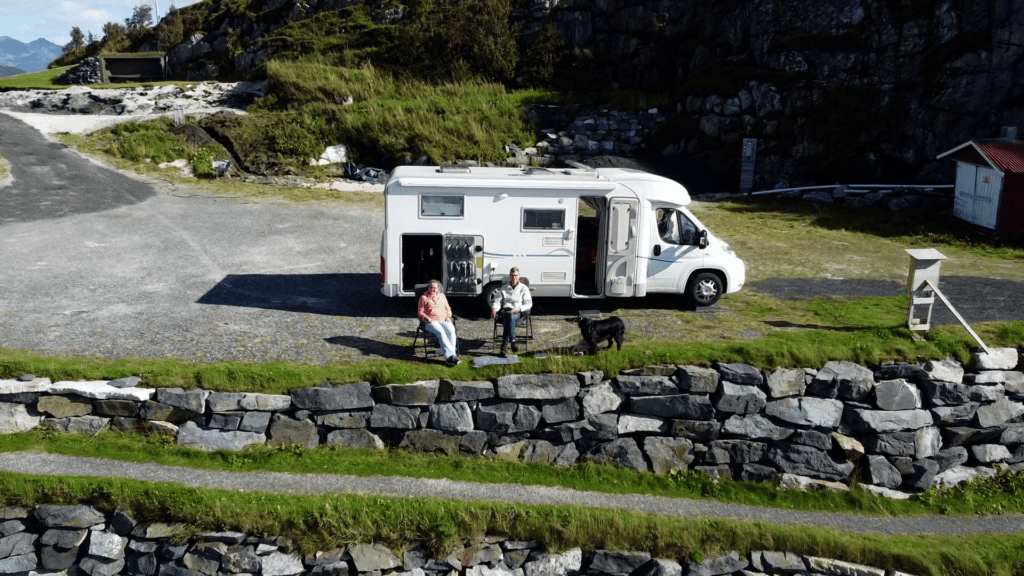
Some of the things we wanted or needed to take with us:
- Ourselves (obviously)
- Cold- and hot-weather clothing (including exercise clothes), shoes for leisure and walking
- Bathroom stuff
- Bedding & towels
- Our dog Isa and her food and toys
- Two e-bikes and a bike trailer for Isa
- Outside chairs and table
- Cutlery, pots, pans, etc.
- Video gear, laptops, and other devices
- Gas bottle
- Gas barbeque
- Tools for repairs to the camper and bikes
- Food and drinks for a couple of days at least
To make sure we could take all these things with us, we also checked to see if there was anything we could remove from our mobile home to save weight. Ultimately, we removed the bike rack on the back of our mobile home and the satellite dish on the roof, saving about 40 kg.
Weighing your camper
There are weighing bridges where you can check the weight of your motorhome. Before leaving, we weighed the camper at such a place and found that we were just under 3.5 tonnes with a full tank of gas and our water tank not completely filled.
Please keep in mind that most of the time one person has to stay outside to do the weighing so don’t forget to add their weight back onto the number you see on the scale.
To ensure we would keep under the weight limit, we needed to be creative while travelling, not filling up water and fuel up to the brim and making sure to lose grey and black water whenever possible.
Your Motorhome Weight
Overall, there are many things to think about when packing for a camping trip in your motorhome, but keeping weight limits and safety in mind should always be a top priority. By planning and preparing carefully, you can help ensure a safe and enjoyable journey for yourself and your companions.
Pin this:


